


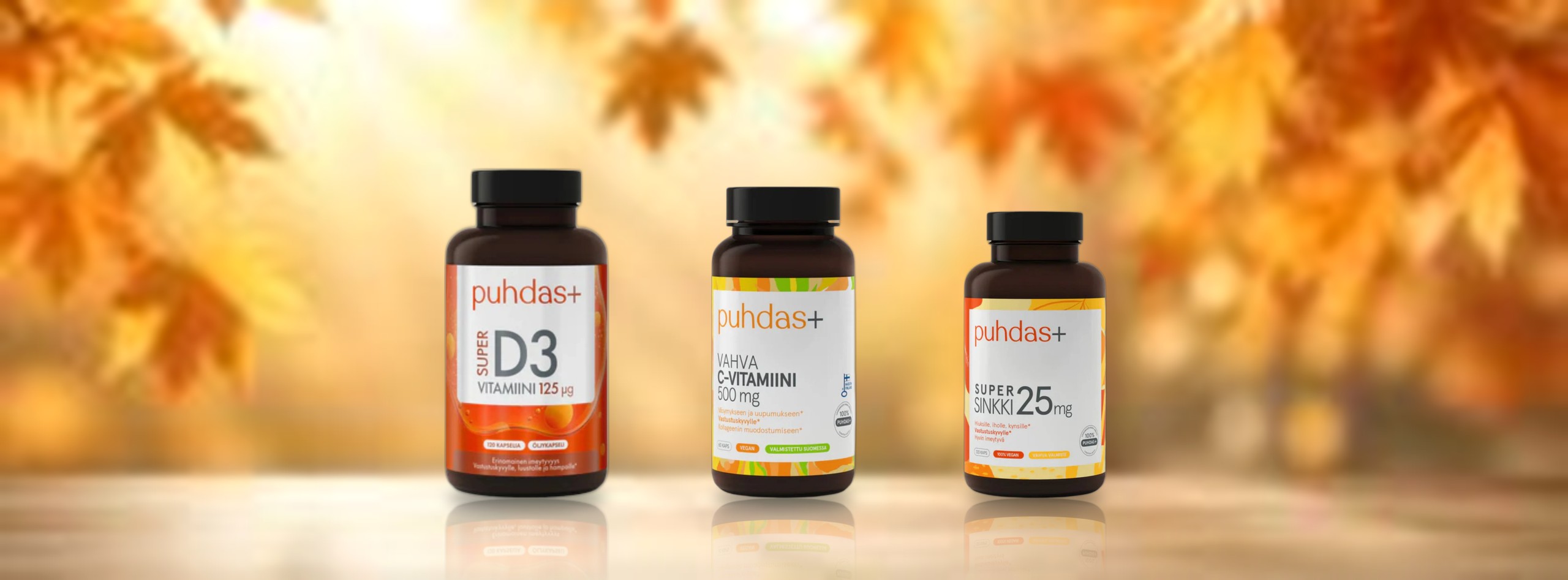
Immunity in autumn: vitamin D, vitamin C and zinc – what do you really need?
Autumn in the Nordics and Baltics is beautiful but honest: the days get shorter, the sun stays low, and the first runny nose comes home from kindergarten. This is when the emails start arriving: “What should I be taking now?” The three nutrients most talked about in connection with immunity are vitamin D, vitamin C and zinc. Let’s calmly go through what they actually do, how much you need, and when a supplement makes sense.

First, honestly: no vitamin “boosts” immunity
The immune system is not a dial you can turn up with a tablet. It does, however, need certain nutrients to work normally, and when they are lacking, the system does not work as it should. That is why the health claims authorised in the EU are worded precisely: vitamin D, vitamin C and zinc contribute to the normal function of the immune system. The goal is to avoid a deficiency, not to take large doses “just in case”.
Vitamin D: the most important vitamin of our autumn and winter
The body makes vitamin D from the sun’s UVB rays. At our latitude the sun is simply too low from October to March, which is why vitamin D deficiency is very common here. Food (oily fish, egg yolk, fortified products) provides only limited amounts.
Vitamin D contributes to the normal function of the immune system, to the maintenance of normal bones and teeth, to normal muscle function, and to the normal absorption and utilisation of calcium and phosphorus.
How much? Nordic and Baltic nutrition recommendations set 10 µg (400 IU) per day for adults and 20 µg for those over 75. During autumn and winter many adults use 50 µg (2000 IU) per day. Higher doses – 100 µg and above – are sensible only with a confirmed deficiency and on a doctor’s advice. The most accurate way to know your need is a blood test (25-OH-D), available at any larger laboratory.
How? Vitamin D is fat-soluble. Take it with food that contains fat, or choose a product where the vitamin is already in oil, like our D3 in olive oil.
Puhdas+ vitamin D3

- Vitamin D3 50 µg – the everyday maintenance dose from autumn to spring, our most popular.
- Vegan Vitamin D3 50 µg and Vegan D3 100 µg – lichen-derived D3 for vegetarians and vegans.
- Vitamin D3 100 µg and Vitamin D3 125 µg in olive oil – a higher dose for a confirmed deficiency.
If you want to read more about vitamin D, we have a separate article: Being aware of vitamin D.
Vitamin C: more than “the cold vitamin”
The body neither makes nor stores vitamin C, so you need it every day. In summer it is easy to get from strawberries and peppers; in autumn there is less fresh produce and cooking destroys part of the vitamin. Good autumn sources are sea buckthorn, blackcurrant, kiwi, citrus fruit and sauerkraut.
Vitamin C contributes to the normal function of the immune system, to the protection of cells from oxidative stress, to the reduction of tiredness and fatigue, to normal collagen formation, and it increases iron absorption. One claim is of interest to athletes: vitamin C contributes to maintaining the normal function of the immune system during and after intense physical exercise, at a daily intake of 200 mg.
How much? The daily reference intake is 80 mg. Supplements commonly provide 500–1000 mg; excess is excreted in urine, but very large doses can cause discomfort for a sensitive stomach. If you take iron, vitamin C is a good companion.
Puhdas+ vitamin C

- Vitamin C 500 mg, 60 capsules – a simple daily capsule.
- Vitamin C powder 1000 mg, 200 g – pure ascorbic acid, flexibly dosed into water or a smoothie.
- Lactoferrin 200 mg + Vitamin C – for those who want something more than vitamin C alone.
Zinc: a small mineral with a big role
The body needs zinc in small amounts, but hundreds of enzymes do not work without it. Food sources are meat, seafood, pumpkin seeds and whole grains; for vegetarians the need is harder to cover, because plant-based zinc is absorbed less well.
Zinc contributes to the normal function of the immune system, to the maintenance of normal skin, hair and nails, to normal cognitive function, to the protection of cells from oxidative stress and to the maintenance of normal vision.
How much? The daily reference intake is 10 mg, and the safe upper level for adults is 25 mg per day. There is no point taking more zinc “just in case”: long-term excess can interfere with copper absorption. Take zinc with food (on an empty stomach it can cause nausea) and separately from iron and large doses of magnesium.
Puhdas+ zinc

- Zinc 25 mg – one capsule a day, simple and clear.
- Zinc and Biotin + Silicon – for those who also think about skin, hair and nails.
- Vitamin water with zinc and vitamin C – a tasty lemon drink if capsules are not your thing.
The autumn basics: a simple plan

If you want a simple routine that needs no thinking, here is our suggestion. With breakfast: vitamin D3 50 µg (together with food containing fat) and vitamin C. With lunch or dinner: zinc 10–25 mg, not on an empty stomach. In the evening, if you wish, magnesium, which contributes to a reduction of tiredness and fatigue and to normal functioning of the nervous system.
And let’s not forget the basics no capsule can replace: 7–8 hours of sleep, movement in fresh air even in the dark season, enough vegetables and protein, and moderate stress.
Frequently asked questions
Can vitamin D be taken together with vitamin C and zinc?
Yes. These three do not interfere with each other’s absorption. Keep zinc apart from iron and from large doses of calcium or magnesium (2–3 hours in between).
When should I start in autumn?
With vitamin D it is sensible to start no later than October and continue until March or April. Vitamin C and zinc are everyday nutrients all year round; a supplement helps when food does not provide enough.
Do children need the same?
Children’s doses are lower than adults’ and depend on age. Ask your family doctor or pharmacist; adult products are not given to children without advice.
You will find all products that support the normal function of the immune system in the immunity category and under vitamins and minerals.
A food supplement is not a substitute for a varied and balanced diet and a healthy lifestyle. Do not exceed the recommended daily dose. Keep out of reach of children. If you are pregnant, breastfeeding, have a chronic condition or take medication, consult your doctor or pharmacist before taking a food supplement.
Leave a Reply
You must be logged in to post a comment.