


Collagen: what it really is, who it suits and how to take it
Collagen has been one of the most talked-about supplements in recent years – and one of the most over-promised. We sell a lot of it, and that is exactly why we want to be honest: what collagen is, what may be said about it, which form to choose and how long to wait for results.

What is collagen?
Collagen is the most abundant protein in the body – about a third of all protein. It is the structural “building material” of skin, tendons, ligaments, cartilage, bone and hair. The body makes it from amino acids, but production slows with age: from around 25–30, the amount of collagen in the skin declines every year.
In supplements collagen is usually hydrolysed, i.e. broken down into short peptides. These dissolve well even in cold water, are practically tasteless and are absorbed more easily than the whole protein. All Puhdas+ collagen powders are hydrolysed collagen peptides.
The honest part: what may and may not be said about collagen
Collagen itself has no authorised health claim in the EU. That means we may not write “smoother skin” or “stronger joints” – and we don’t. What we can say: collagen powder is a quality protein source (about 9 g protein per 10 g serving) that can be used every day without any taste.
Claims are allowed for nutrients added to our collagen products: vitamin C contributes to normal collagen formation for the normal function of skin, bones, cartilage and gums, biotin contributes to the maintenance of normal hair and skin and zinc contributes to the maintenance of normal hair, skin and nails. That is why our Beauty range always has vitamin C or biotin next to collagen.
Powder or capsule?

Powder is the most economical way to take collagen because the amount is large: 5–10 g per day. Premium collagen 250 g is our best-seller – tasteless, dissolves in coffee, porridge and smoothies, one jar lasts about a month. Sport collagen with vitamin C and OptiMSM is for the athlete who wants vitamin C alongside collagen to support normal collagen formation.
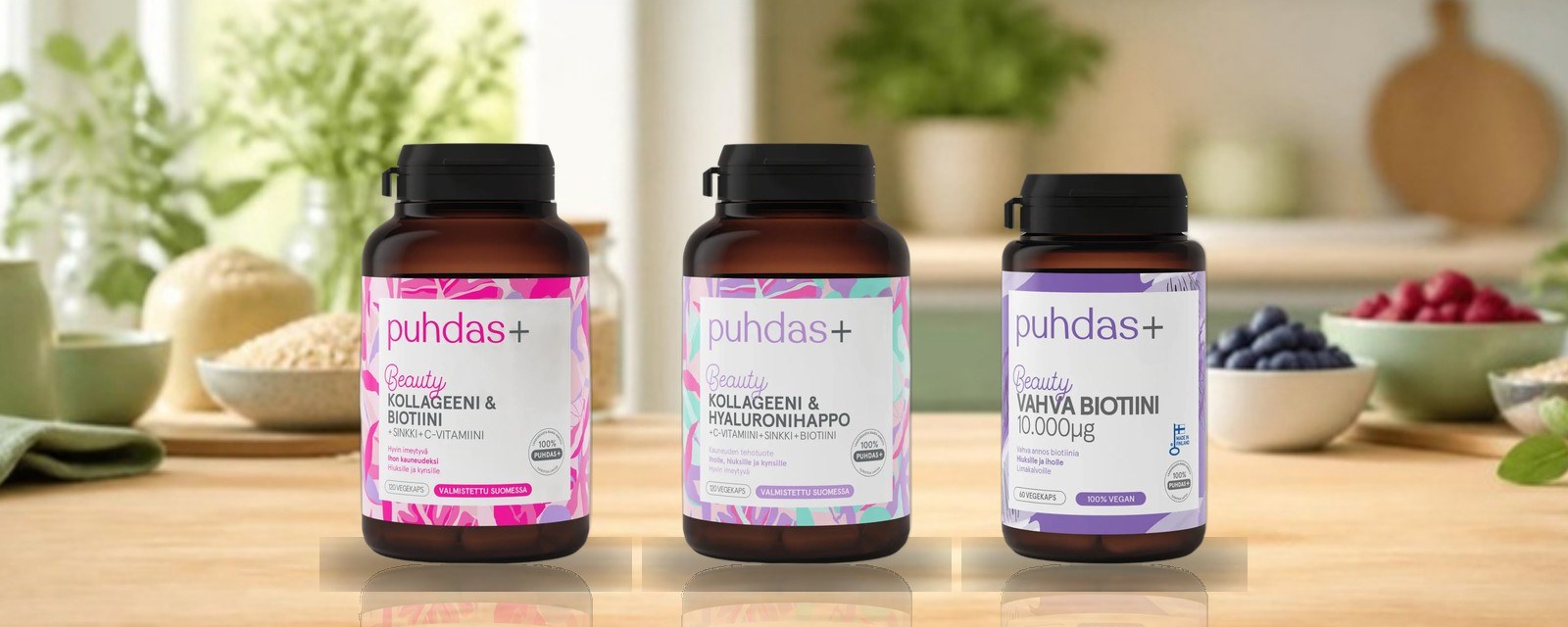
Capsules are more convenient, but the collagen amount is smaller – so in capsules the focus is on the added nutrients. Beauty collagen and biotin combines both, Beauty collagen & hyaluronic acid + vitamin C adds hyaluronic acid and vitamin C. Beauty Biotin 10 000 µg is pure biotin for those focused on hair and nails. And for those who want neither powder nor capsules, there are collagen candies.
How to take it and how long to wait?
Powder: 1–2 scoops (5–10 g) a day in any drink. Collagen does not mind heat – coffee is fine. Capsules with a meal. The time of day does not matter; consistency does.
And here is the most important sentence: the skin renewal cycle is about 4–6 weeks, hair grows 1 cm a month, a nail renews itself in 4–6 months. It is sensible to take it consistently for at least 8–12 weeks and only then judge. Whoever gives up after two weeks never finds out.
Who is collagen not for?
Collagen is an animal protein – ours is bovine or fish collagen – so it is not suitable for vegans. For vegans: vitamin C contributes to normal collagen formation for the normal function of skin, and biotin and zinc contribute to the maintenance of normal skin and hair. With a fish or beef allergy always check the ingredients. During pregnancy and breastfeeding talk to your doctor first, as with any supplement.
Frequently asked questions
Can collagen go into hot coffee?
Yes. Hydrolysed collagen peptides tolerate heat and dissolve completely in coffee.
Do collagen and vitamin C have to be taken together?
Not necessarily, but vitamin C contributes to normal collagen formation – which is why it is already in our Sport and Beauty products.
Is 10 000 µg of biotin too much?
No upper safe level has been set for biotin and excess is excreted in urine. Tell your doctor you take biotin before blood tests, as it can affect some test results.
You will find all collagen and biotin products here and skin, hair and nail products here.
A food supplement is not a substitute for a varied and balanced diet or a healthy lifestyle. Do not exceed the recommended daily dose. Keep out of reach of children. If you are pregnant, breastfeeding, have a chronic illness or take medication, consult a doctor or pharmacist before taking a food supplement.