


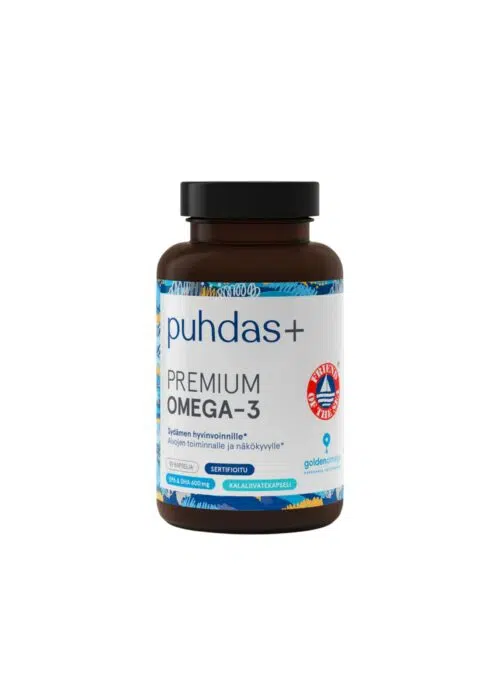
The omega-3 fatty acids EPA and DHA are nutrients the body doesn’t produce itself – they have to come from oily fish or a food supplement. Puhdas+ Premium Omega-3 is a fish oil with EPA and DHA in natural triglyceride form; it undergoes thorough purification to remove heavy metals and carries Friend of the Sea certification. Read more ↓
-
Brain and nervous system, Heart and circulation, In stock, Omega and fatty acids
Premium Omega-3
Price range: 43.50€ through 64.90€ -
 Digestion and liver, Immunity, In stock, Omega and fatty acids
Black cumin oil
Price range: 19.50€ through 29.50€ -
Brain and nervous system, Eyes and vision, Heart and circulation, Omega and fatty acids, Sale products
Premium Omega-3 with Lutein and Zeaxanthin
Price range: 17.00€ through 30.00€ -
 Brain and nervous system, Heart and circulation, Omega and fatty acids
Premium Omega-3 180 mg EPA + 120 mg DHA
Price range: 13.90€ through 20.50€ -
-
-
-
-
-




Why omega-3?
EPA and DHA contribute to the normal function of the heart (the beneficial effect is obtained with a daily intake of 250 mg of EPA and DHA). DHA contributes to the maintenance of normal brain function and normal vision (250 mg of DHA a day). The Estonian nutrition recommendations advise eating oily fish 2–3 times a week – if that doesn't happen, fish oil is a sensible addition.
How to choose a fish oil
Look at the amount of EPA and DHA on the label, not the amount of "fish oil" – that's the only number that matters. Premium Omega-3 is our core product. Omega-3 with lutein and zeaxanthin is for those who are also thinking about their eyes. Omega-7 is palmitoleic acid from sea buckthorn. Plant oils – flaxseed, pumpkin seed and black cumin oil – are a separate category: their omega-3 is ALA, which the body converts into EPA and DHA only to a small extent.
How to take it
With food that contains fat, usually 1–2 capsules a day. A fishy aftertaste is a sign the capsule was taken on an empty stomach. Keep the jar in a cool, dark place; use an opened jar within 2–3 months.
Frequently asked questions
How much omega-3 should I take a day?
For the claim on normal heart function, 250 mg of EPA + DHA a day is sufficient. Many people take 500–1000 mg, especially if fish isn't on the menu. More than 5 g of EPA + DHA a day from food supplements is not recommended.
Can omega-3 be taken with vitamin D?
Yes – both are fat-soluble and are convenient to take together with the same meal.
Can plant-based omega-3 replace fish oil?
Flaxseed oil and chia contain ALA, which the body converts into EPA and DHA only to the extent of a few per cent. For vegans, algal oil is an alternative; plant oils are a good addition, not a replacement.
Where does the fish come from, and is the oil purified?
The fish for Premium Omega-3 is caught in the clean waters of the South Pacific, and the oil goes through a thorough purification process to remove heavy metals and contaminants. The product carries Friend of the Sea certification, confirming sustainable fishing.
Food supplements should not be used as a substitute for a varied and balanced diet and a healthy lifestyle. Do not exceed the recommended daily dose. Keep out of the reach of children.