


Vitamin D is the most important vitamin of the Estonian autumn and winter – from October to March the sun is too low for the skin to produce it. Puhdas+ vitamin D3 products come in olive oil, in doses of 50–125 µg, and also as a vegan version from lichen. Read more ↓
-
 Immunity, Joints, muscles and bones, Vitamin D, Vitamins
Vitamin D3 100 µg
Price range: 13.90€ through 24.50€ -

-
 Immunity, Joints, muscles and bones, Vitamin D, Vitamins
Vitamin D3 50 µg
Price range: 17.50€ through 30.50€ -

-
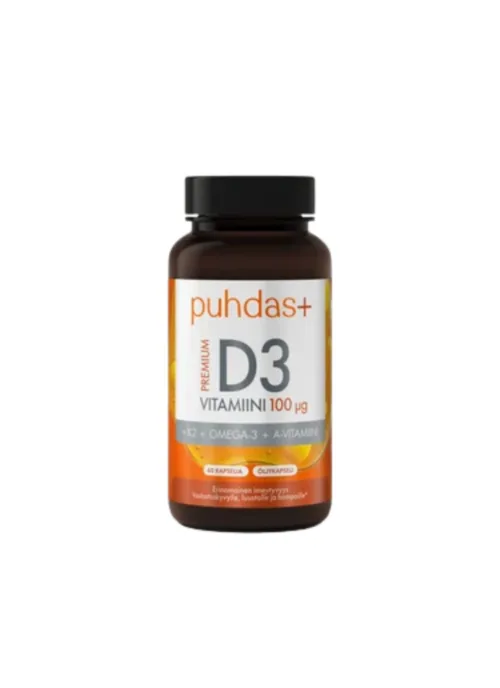
 Immunity, New products, Vitamin D, Vitamin K2, Vitamins
Premium Vitamin D3 100 µg + K2 + Omega-3 + Vitamin A 60 capsules
Price range: 21.50€ through 38.00€ -
-
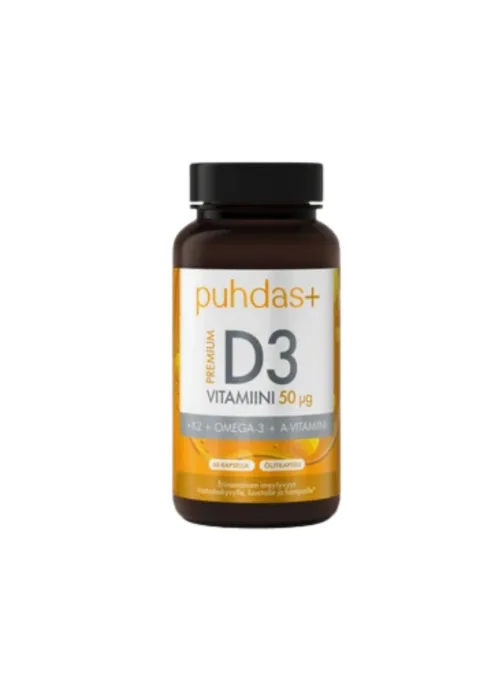 Immunity, New products, Vitamin D, Vitamin K2, Vitamins
Premium Vitamin D3 50 µg + K2 + Omega-3 + Vitamin A
Price range: 17.50€ through 30.50€
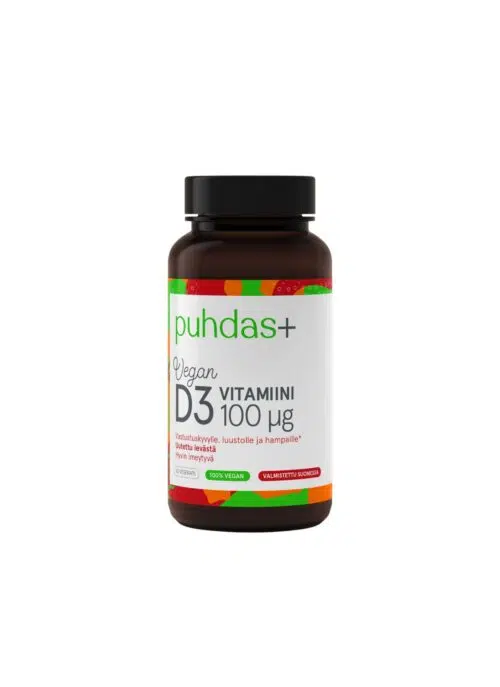
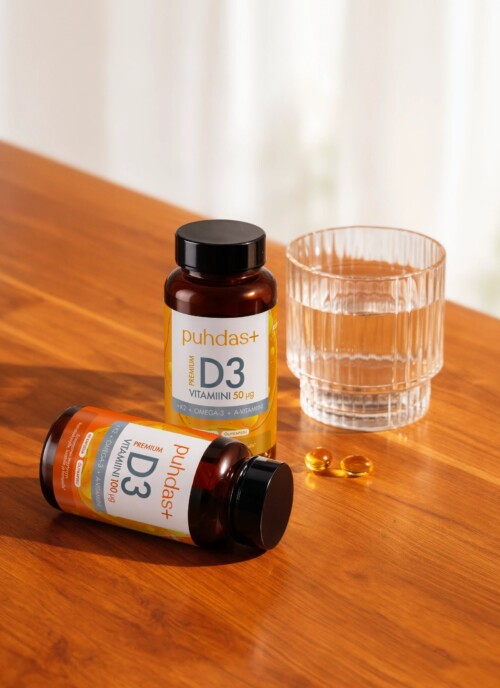
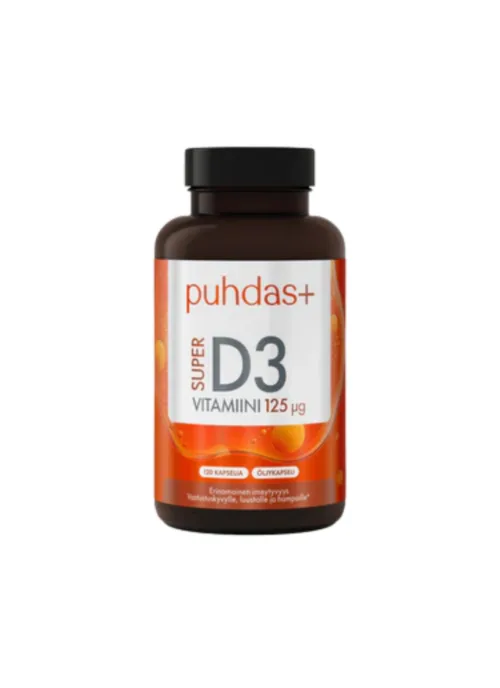
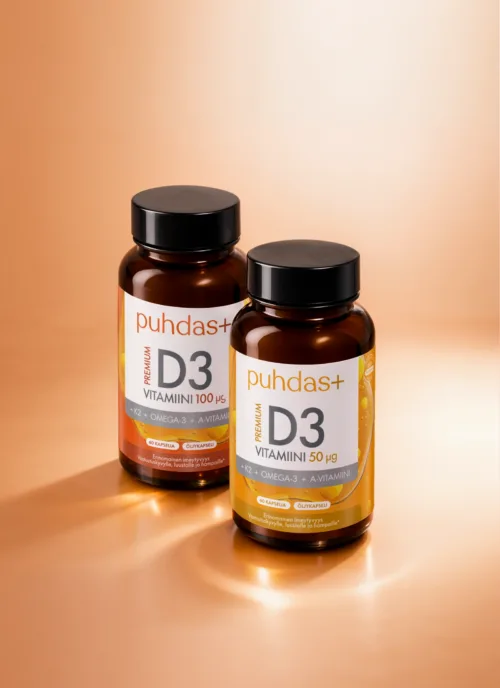
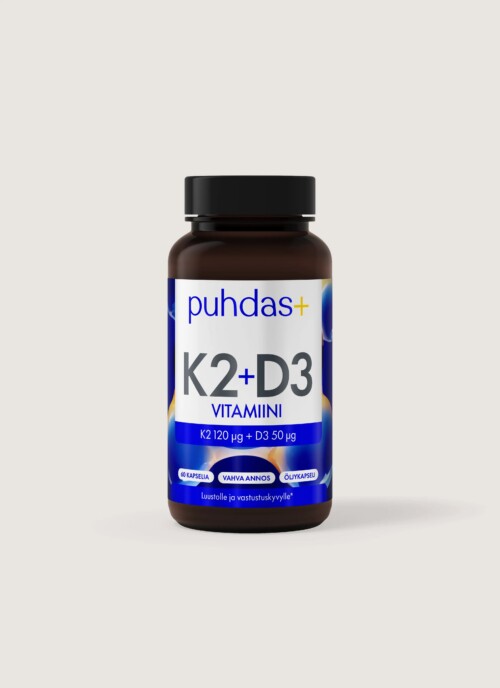
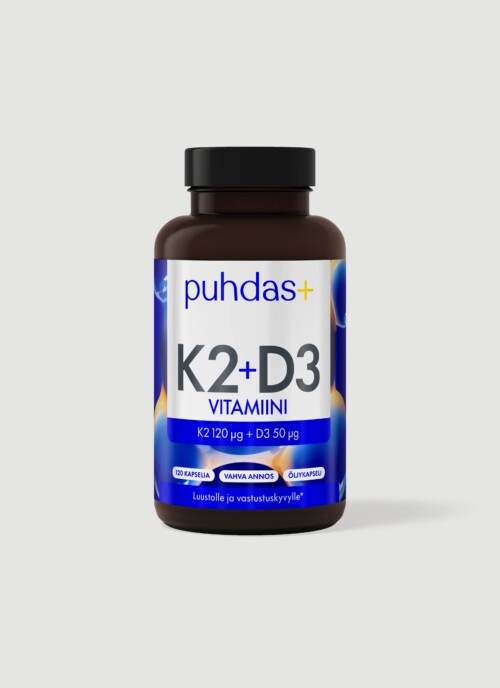
Why take extra vitamin D?
Vitamin D contributes to the normal function of the immune system, to normal absorption of calcium and phosphorus, and to the maintenance of normal bones, teeth and muscle function. Food (oily fish, egg yolk) provides only limited amounts, which is why vitamin D deficiency is one of the most common deficiencies in Estonia. The Estonian nutrition recommendations set 10 µg a day for adults and 20 µg for people over 75; in autumn and winter many adults take 50 µg (2000 IU).
Which dose should I choose?
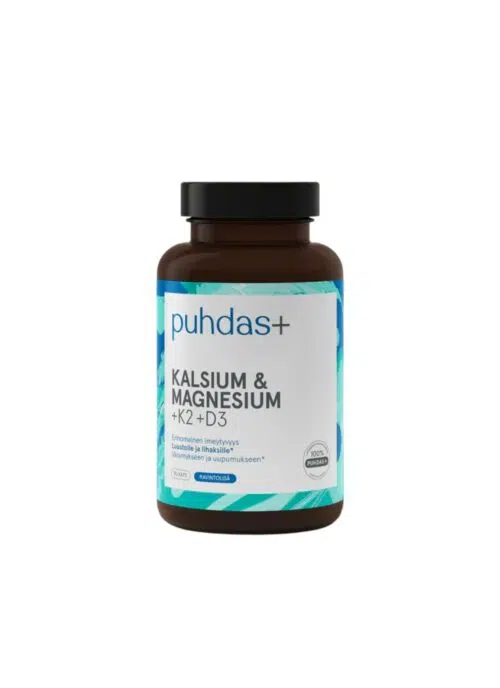
D3 50 µg is an everyday maintenance dose from autumn to spring and our most popular choice. 100 µg and 125 µg are higher-dose options – the most accurate way to find out what you need is a blood test (25-OH-D). For vegetarians there is vegan D3 from lichen. If you're looking for a combination, Calcium + Magnesium + K2 + D3 combines nutrients that contribute to the maintenance of normal bones in a single capsule.
How to take it
Vitamin D is fat-soluble – take it with food that contains fat, or choose a product in which the vitamin is already in oil, like our D3 in olive oil. One capsule a day, preferably with breakfast. More background: Vitamin D explained – why, when and how to choose.
Frequently asked questions
Do I need to take vitamin D in summer?
If you spend at least 15–20 minutes a day in the sun with bare arms and face, your skin produces vitamin D itself. If you work in an office or use sunscreen, a small dose makes sense in summer too.
What is the difference between vitamin D2 and D3?
D3 (cholecalciferol) is the form the skin produces itself, and it is considered more effective than D2. All Puhdas+ vitamin D products are D3; the vegan version is made from lichen.
Can vitamin D be taken with magnesium and K2?
Yes, they go well together – vitamin K contributes to the maintenance of normal bones and magnesium contributes to normal muscle function. Our Calcium + Magnesium + K2 + D3 is exactly this kind of combination.
Is 100 µg a day too much?
The European Food Safety Authority has set 100 µg a day as the tolerable upper intake level for adults. Take higher doses only on the basis of a blood test and a doctor's advice.
Food supplements should not be used as a substitute for a varied and balanced diet and a healthy lifestyle. Do not exceed the recommended daily dose. Keep out of the reach of children.
Vitamin D — the sunshine vitamin for bones and immune system
Vitamin D is a fat-soluble vitamin that the body produces in the skin under the influence of sunlight. In Estonia’s climate, there is sufficient sunlight only during the summer half of the year, which is why taking vitamin D as a food supplement is particularly important during the autumn-winter period.
Vitamin D contributes to the normal function of the immune system, the maintenance of normal bones and teeth, normal absorption of calcium and phosphorus, and normal muscle function. The Puhdas+ selection includes vitamin D3 in different strengths — 50 µg and stronger doses are suitable for daily consumption.
How much vitamin D should you take?
The recommended daily dose depends on individual needs, season and lifestyle. Vitamin D can be taken with fat-containing food, as it is fat-soluble and is better absorbed with fats. Vitamin D works well when taken together with vitamin K2. Explore our complete vitamin selection. Food supplements should not be used as a substitute for a varied diet.