


Most people’s everyday diet is short of fibre – which makes fibre a good place to start. Here you’ll find Puhdas+ fibres, lactic acid bacteria, digestive enzymes and kombuchas. Read more ↓
-

-
Digestion and liver, Drinks, In stock, Kombuchas, Sale products
Wild Blueberry Kombucha 330ml
Price range: 2.90€ through 67.90€ -
 Digestion and liver, Immunity, In stock, Omega and fatty acids
Black cumin oil
Price range: 19.50€ through 29.50€ -
Digestion and liver, Drinks, In stock, Kombuchas
Kombucha Cherry 330 ml
Price range: 3.80€ through 84.90€ -
Digestion and liver, Probiotics and enzymes
Saccharomyces Boulardii 250mg
Price range: 13.90€ through 26.50€ -
-
Digestion and liver, Drinks, In stock, Kombuchas, Sale products
Apple-Lime Kombucha 330ml
Price range: 2.90€ through 64.50€ -
-
Digestion and liver, Drinks, In stock, Kombuchas, Sale products
Ginger Kombucha 330ml
Price range: 2.90€ through 84.90€









Where to start?
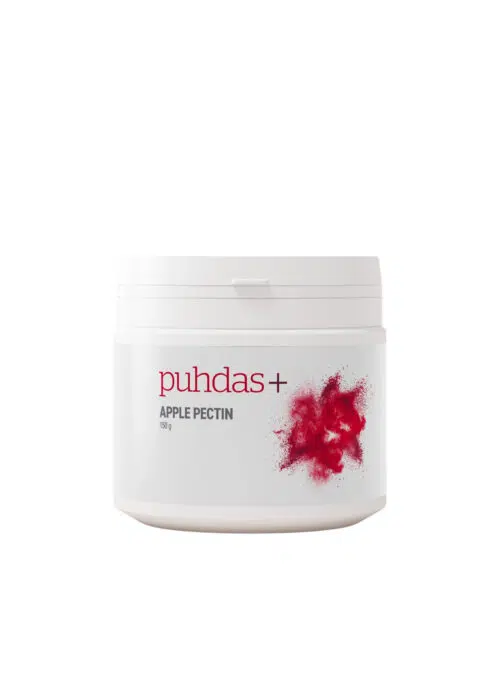
Nutrition recommendations advise adults to eat 25–35 g of fibre a day, but the actual average falls well short of this. A fibre powder stirred into porridge, yoghurt or a smoothie is the easiest way to close the gap. Psyllium is the most gel-forming soluble fibre (a teaspoon a day + a glass of water), oat fibre is tasteless and works in baking, apple pectin provides pectins, which contribute to the maintenance of normal blood cholesterol levels (6 g of pectins a day), and acacia fibre is the gentlest.
Lactic acid bacteria and enzymes
Lactic acid bacteria are live microorganisms that are also found in sauerkraut, kefir and kombucha. No health claims have been authorised for them in the European Union, so we'll be honest: they are a food that a great many of our customers have made part of their routine. Our Lactic acid bacteria with oat fibre and glutamine combines both fibre and bacteria in a single powder. Enzyme is a blend of ten digestive enzymes to take with larger meals.
Read more
The whole topic is covered in the article Digestion and the gut: fibre, lactic acid bacteria and enzymes – where to start?. If you have persistent complaints, pain or weight loss, see your GP – food supplements are a support, not a substitute for treatment.
Frequently asked questions
How much fibre do I need a day?25–35 g for adults. Start the supplement with a small amount (half a teaspoon) and increase it over a week, and drink more water – fibre needs it.
Can I take psyllium every day?
Yes, in small amounts and with enough water. Leave 1–2 hours between medication and psyllium, as fibre can slow down absorption.
How should I take lactic acid bacteria?
Capsules with food; powder in cool or lukewarm food, as hot porridge kills the live bacteria. Store in a cool, dry place.
When should I take enzymes?
At the start of a meal, usually with a larger or fattier meal – not every day from morning to night.
Food supplements should not be used as a substitute for a varied and balanced diet and a healthy lifestyle. Do not exceed the recommended daily dose. Keep out of the reach of children.