


Omega-3: what EPA and DHA are, and how to choose a fish oil that actually contains something
If you asked which supplement is the most researched and at the same time the most confusing, omega-3 would be a strong candidate. There are dozens of jars on the shelf, all promising “omega-3”, yet the numbers on the back differ tenfold. Here is what we tell our own customers: what EPA and DHA are, how much you really need and what to look for on the label.

Omega-3 is not one thing but three
There are several omega-3 fatty acids. The three that matter are ALA (in flaxseed oil, chia, walnuts), EPA and DHA (in oily fish and fish oil). The body can make EPA and DHA from ALA, but only a few percent of it – so flaxseed oil is good food, not a fish-oil substitute.
EPA and DHA are the ones with authorised EU health claims: EPA and DHA contribute to the normal function of the heart (250 mg per day), DHA contributes to the maintenance of normal brain function and normal vision (250 mg DHA per day). For pregnant women: DHA contributes to the normal development of the eyes and brain of the foetus and breastfed infant (200 mg DHA on top of the daily intake).
How much do you really need?
Nordic nutrition guidelines recommend oily fish 2–3 times a week – salmon, trout, herring, mackerel, sprat. If that happens, a supplement is not strictly necessary. If fish lands on the table once a month, fish oil is a sensible addition.
The claims threshold is 250 mg EPA + DHA per day. Many take 500–1000 mg, especially in winter and when fish is not on the menu. The safe upper level from supplements is 5 g EPA + DHA per day – hard to exceed, but “more is better” does not apply.
What to look for on the label – the only number that matters

The jar may say “1000 mg fish oil” in big letters. That tells you nothing. What counts is how much EPA and DHA it contains – a cheap 1000 mg capsule may hold only 300 mg EPA+DHA, a quality one 600–800 mg. Find the rows “EPA” and “DHA” in the nutrition table and add them up.
The second thing is the form. Fish oil comes either as triglycerides (natural, as in fish) or ethyl esters (cheaper to process). The body absorbs the triglyceride form better. Our Premium Omega-3 is in natural triglyceride form; the fish is caught in the clean waters of the South Pacific, the oil goes through thorough purification from heavy metals and carries the Friend of the Sea certificate.
The third is freshness. Fish oil oxidises – old oil or oil stored in the warm tastes and smells fishy. Keep the jar cool and dark and use an opened jar within 2–3 months.
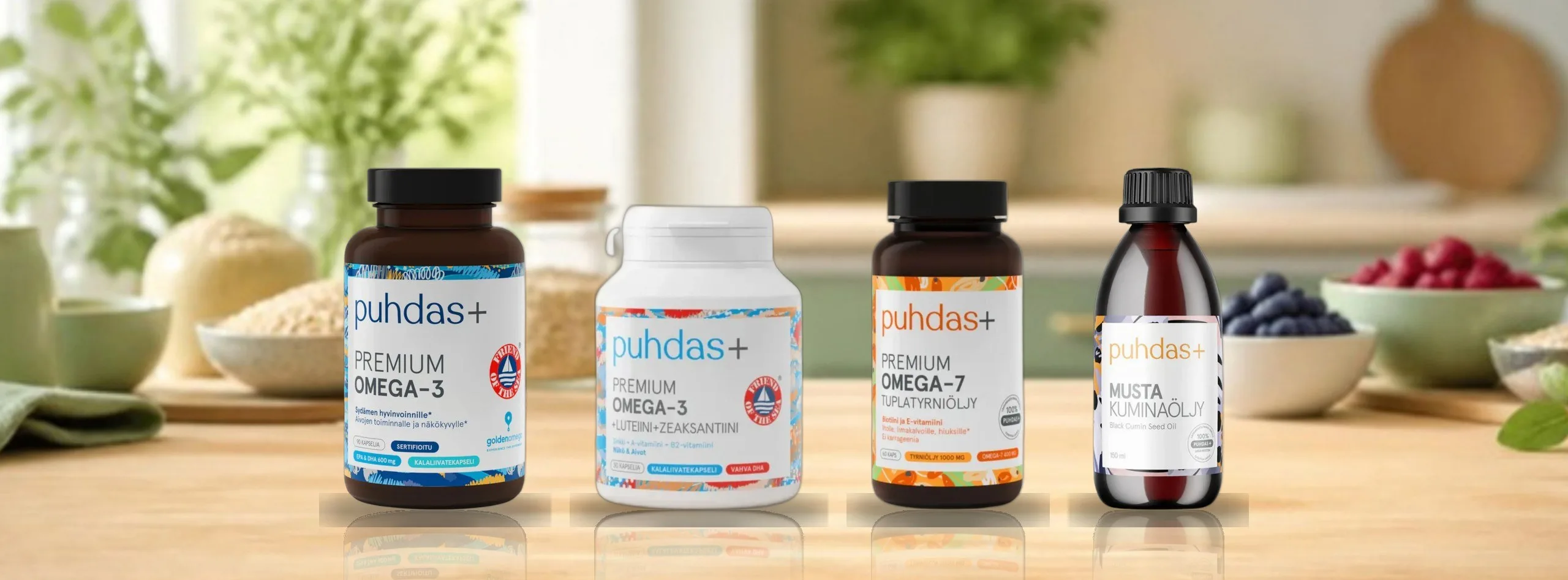
Puhdas+ omega products
- Premium Omega-3 – our core product, high EPA/DHA fish oil in triglyceride form.
- Premium Omega-3 180 mg EPA + 120 mg DHA – a lower-dose option for those who also eat fish.
- Premium Omega-3 with lutein and zeaxanthin – for those who also think about their eyes: DHA contributes to the maintenance of normal vision.
- Premium Omega-7 – palmitoleic acid from sea buckthorn, a separate story next to omega-3.
- Black cumin seed oil – a traditional plant oil many take in autumn and winter.
How and when to take it?
With a meal that contains fat – breakfast with eggs or lunch works well. A capsule taken on an empty stomach “comes back” as a fishy taste; with food it does not. If the taste still bothers you, keep the jar in the fridge or take the capsule right before eating.
Omega-3 pairs well with vitamin D – both are fat-soluble and it makes sense to take them with the same meal. If you take blood-thinning medication, talk to your doctor before starting larger doses.
Frequently asked questions
Does plant omega-3 (flaxseed oil, chia) replace fish oil?
Not quite. Plant omega-3 is ALA, of which the body converts only a few percent into EPA and DHA. For vegans the alternative is algae oil, which contains DHA directly.
Can children take fish oil?
Yes, DHA is important for children, but doses depend on age. Ask a pharmacist or family doctor; adult capsules are not given to small children.
Why does fish oil sometimes smell?
Because the oil has oxidised – it is old, has been stored warm, or the jar has been open too long. Fresh, good-quality fish oil hardly smells at all.
You will find all omega products in the omega and fatty acids category. When to take what, we covered in Does the timing of taking supplements matter?.
A food supplement is not a substitute for a varied and balanced diet or a healthy lifestyle. Do not exceed the recommended daily dose. Keep out of reach of children. If you are pregnant, breastfeeding, have a chronic illness or take medication, consult a doctor or pharmacist before taking a food supplement.