


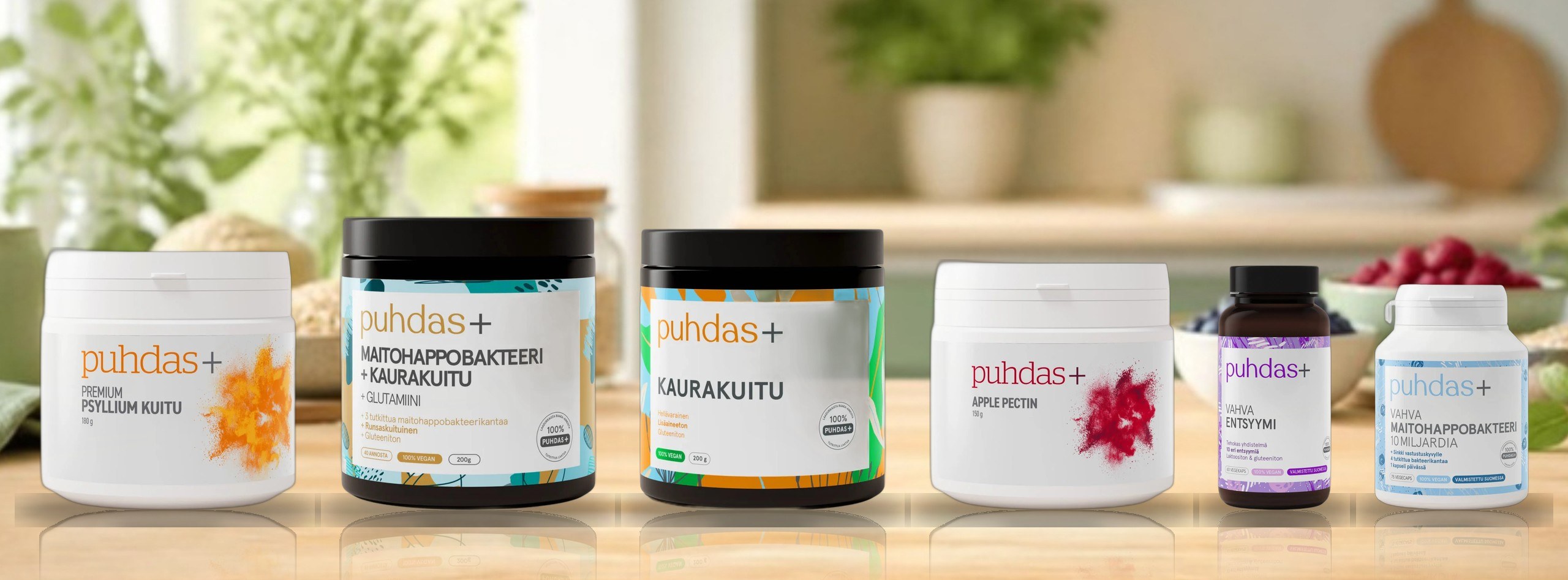
Digestion and gut: fibre, lactic acid bacteria and enzymes – where to start?
Ask people what bothers them most on an ordinary day and the answer is usually not sleep or energy – it’s their stomach. Bloating after lunch, a heavy feeling, “sometimes it works, sometimes it doesn’t”. And because gut health is everywhere right now – probiotics, fibre, enzymes, kombucha – it is easy to get confused about what actually helps and what is just a buzzword.
We wrote down what we honestly tell our own customers: what fibre, lactic acid bacteria and enzymes are, who they are for, and where to start.

Start where the impact is biggest: fibre
If we had to pick one thing most people get too little of every day, it would be fibre. Nutrition guidelines recommend 25–35 g of fibre per day for adults; the real average falls well short of that. Fibre is the part of plant food our digestive enzymes cannot break down – it travels all the way through the gut and does its work there.
The best source of fibre is still food: whole grains, legumes, vegetables, berries, nuts and seeds. But life is what it is – a rushed morning, lunch at the desk, something quick in the evening. This is where a fibre powder helps: stir it into porridge, yoghurt or a smoothie and the day is already half better.
Which fibre is which?
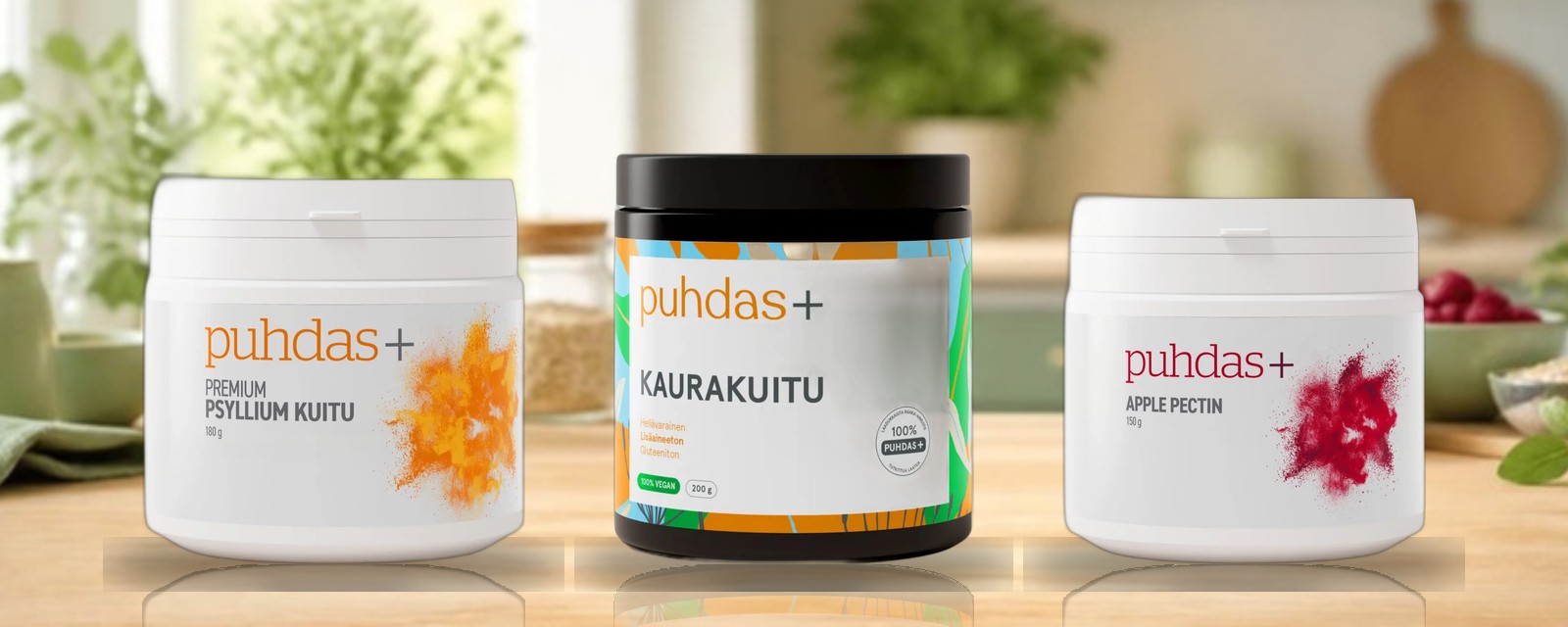
Psyllium is the seed husk of the Indian plantain, which binds a lot of water and swells into a gel. It is the “strongest” soluble fibre we carry – a teaspoon a day is already enough for many. Important: always drink a glass of water with psyllium.
Oat fibre is almost tasteless and goes perfectly into porridge, baking or yoghurt. Oat grain fibre contributes to an increase in faecal bulk – in plain words, that is what most people expect from fibre.
Apple pectin is a soluble fibre from apples, familiar from jam-making. Pectin has two health claims authorised in the EU: pectin contributes to the maintenance of normal blood cholesterol levels (6 g per day), and consumption of pectin with a meal contributes to the reduction of the blood glucose rise after that meal (10 g per meal).
Acacia fibre is the gentlest option – it dissolves completely in water, does not swell or taste of anything, and suits those who find psyllium too “forceful”.
- Premium psyllium fibre 180 g – strong soluble fibre, a small amount per day.
- Oat fibre 200 g – tasteless, ideal in porridge and baking.
- Apple pectin 150 g – soluble fibre with two authorised health claims.
- Acacia fibre 200 g – the gentlest, dissolves completely.
One practical tip: start with a small amount (half a teaspoon) and increase over a week. If you add a lot of fibre at once, your stomach may “protest” for a few days – that is normal and passes. And drink more water; fibre needs it.
Lactic acid bacteria – what they are and what we can honestly say about them
Lactic acid bacteria are live microorganisms found naturally in fermented foods – sauerkraut, kefir, yoghurt, kimchi. In a food supplement they come as specific strains in a specific amount, measured in billions (CFU, colony-forming units).
Now the honest part. In the EU there is no authorised health claim for lactic acid bacteria – which means we may not, and do not want to, promise that they “restore the gut” or “boost immunity”. What we can say: they are a food containing live bacteria, and a great many of our customers have made them part of their daily routine, especially after a course of antibiotics, when travelling, or during periods when meals are less varied. Whether they suit you, you will find out best by trying.
Puhdas+ lactic acid bacteria
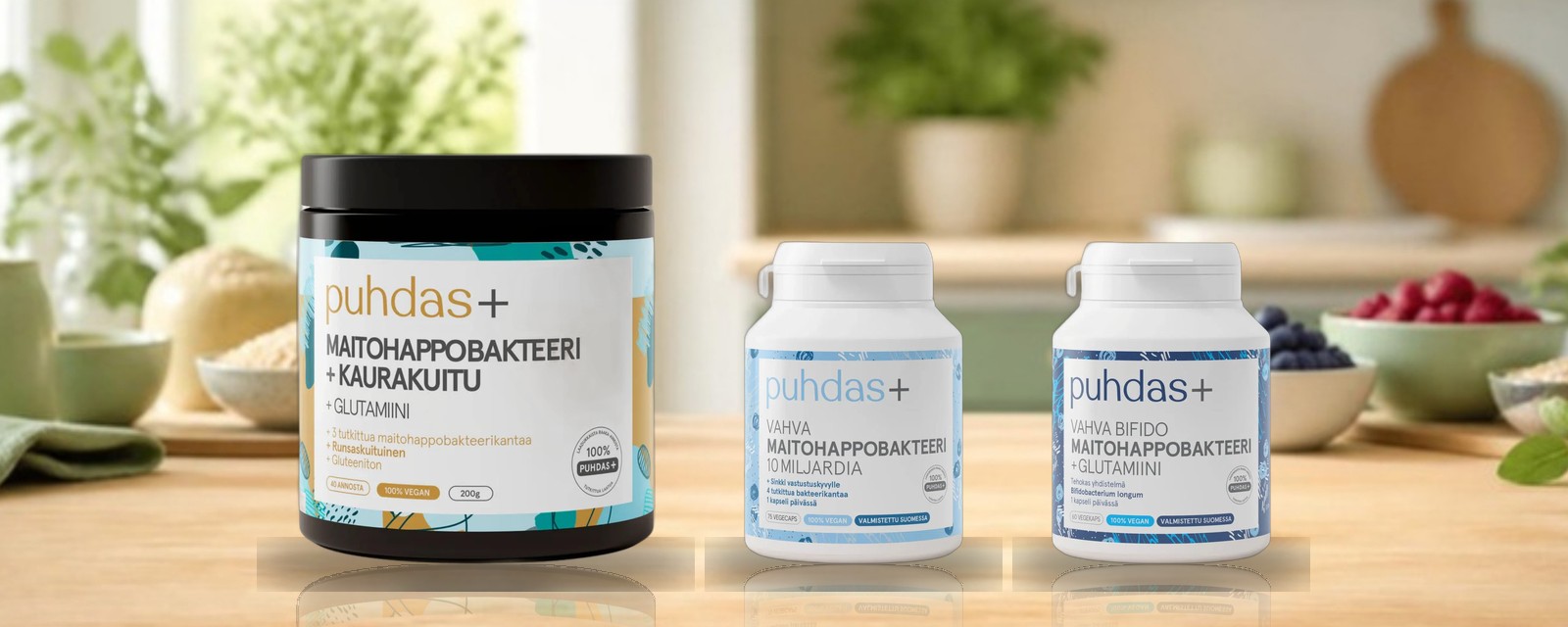
- Lactic acid bacteria with oat fibre and glutamine 200 g – a powder combining three things: lactic acid bacteria, oat fibre and the amino acid glutamine. Our most convenient “all in one” for the morning porridge.
- Lactic acid bacteria 5 billion and 10 billion, 75 capsules – the classic capsule, one a day. 5 billion is a good start; 10 billion is for those who want a larger amount.
- Strong Bifido + glutamine 60 capsules – bifidobacteria strains together with glutamine.
How to take? Take capsules with food; stir the powder into cool or lukewarm food – hot porridge kills live bacteria. Store cool and dry, as stated on the label.
Enzymes – for when a meal is heavy

Digestive enzymes are proteins that break food into smaller parts: amylase handles carbohydrates, protease proteins, lipase fats, lactase milk sugar. The body produces them itself, but a lavish festive meal, very fatty food or changes that come with age make some people look for extra support.
Here too we are honest: enzyme products have no authorised health claims in the EU. Our Enzyme 60 capsules contains a blend of ten different digestive enzymes and is taken with a meal – usually the larger meal of the day, not from morning to night. The same logic applies to Strong Bromelain 800 GDU – an enzyme from pineapple that many take alongside protein-rich food.
Kombucha and fermented foods – the tasty part of every day
Not everything has to come from a jar. Sauerkraut, kefir, soured milk, kimchi and kombucha are fermented foods that were part of Nordic kitchens long before anyone knew the word “probiotic”. Our kombuchas are live-fermented and low in sugar – a good alternative to lemonade in the afternoon when you fancy something fizzy.
The most important part: habits
No powder replaces a few simple things digestion loves most:
- Water. 1.5–2 litres a day, even more important alongside fibre.
- Movement. A walk after a meal does more than you would think.
- Calm eating. Chewing is the first step of digestion – at the table, not behind the wheel.
- Regularity. The body loves rhythm: mealtimes, bedtime, a morning routine.
- Plant variety. Aim for 20–30 different plant foods a week – vegetables, fruit, grains, legumes, nuts, herbs.
A simple plan to start with
If you want to start with one thing, start with fibre: a teaspoon of psyllium or a tablespoon of oat fibre in the morning porridge, with a glass of water. Once that has become a habit after a couple of weeks, add lactic acid bacteria with oat fibre and glutamine if you like – one powder covers both fibre and bacteria. Save the enzymes for big meals and celebrations.
If you have persistent digestive problems, pain or weight loss, do not experiment with supplements – see your doctor. Supplements are support, not a replacement for treatment.
Frequently asked questions
Can fibre and lactic acid bacteria be taken together?
Yes, they go well together – in our 200 g powder they are already in one jar. Fibre plus bacteria is actually a logical combination.
Is psyllium suitable every day?
Yes, in a small amount and with enough water. If you take medication, leave 1–2 hours between psyllium and the medicine, as fibre can slow absorption. We wrote more about this in What vitamins and supplements should not be taken together?.
When is the best time?
Fibre in the morning or with a meal, lactic acid bacteria with food, enzymes at the start of a meal. More here: Does the timing of taking supplements matter?
What about travel and barbecue season?
We have a separate story for that: Summer barbecues and holidays – how to keep your stomach in check.
You will find all digestion products in the digestion and liver category.
A food supplement is not a substitute for a varied and balanced diet or a healthy lifestyle. Do not exceed the recommended daily dose. Keep out of reach of children. If you are pregnant, breastfeeding, have a chronic illness or take medication, consult a doctor or pharmacist before taking a food supplement.