


Evening routine: how to fall asleep more easily – and what role magnesium plays
In November we get more messages on one topic than any other: “I can’t fall asleep” or “I wake at three and my thoughts race”. We are not sleep doctors and do not pretend to be. But over the years we have seen what actually helps people – and it rarely starts with a jar.

First, what no capsule can replace
Sleep is rhythm. The body wants to go to bed and wake up at the same time every day – weekends included. Sleeping until noon on Saturday gives you Monday-morning jet lag without travelling.
Four things that affect sleep more than any supplement:
- Light. As much daylight as possible in the morning (go outside even when it is cloudy), dimness in the evening. Screens off an hour before bed, or at least in night mode.
- Caffeine. Its half-life is 5–6 hours. Half of a 4 pm coffee is still in you at 10 pm. Last coffee before noon.
- Temperature. A cool (17–19 °C) and dark bedroom. A warm shower before bed helps the body cool down.
- Routine. The same order every evening – tea, book, lights down – tells the body what is coming.
Magnesium in the evening routine – what may be said

Magnesium is our best-selling evening product, and here we have to be precise. Authorised EU claims say that magnesium contributes to normal functioning of the nervous system, normal psychological function and the reduction of tiredness and fatigue. The claim “improves sleep” is not authorised for magnesium – and we do not make it.
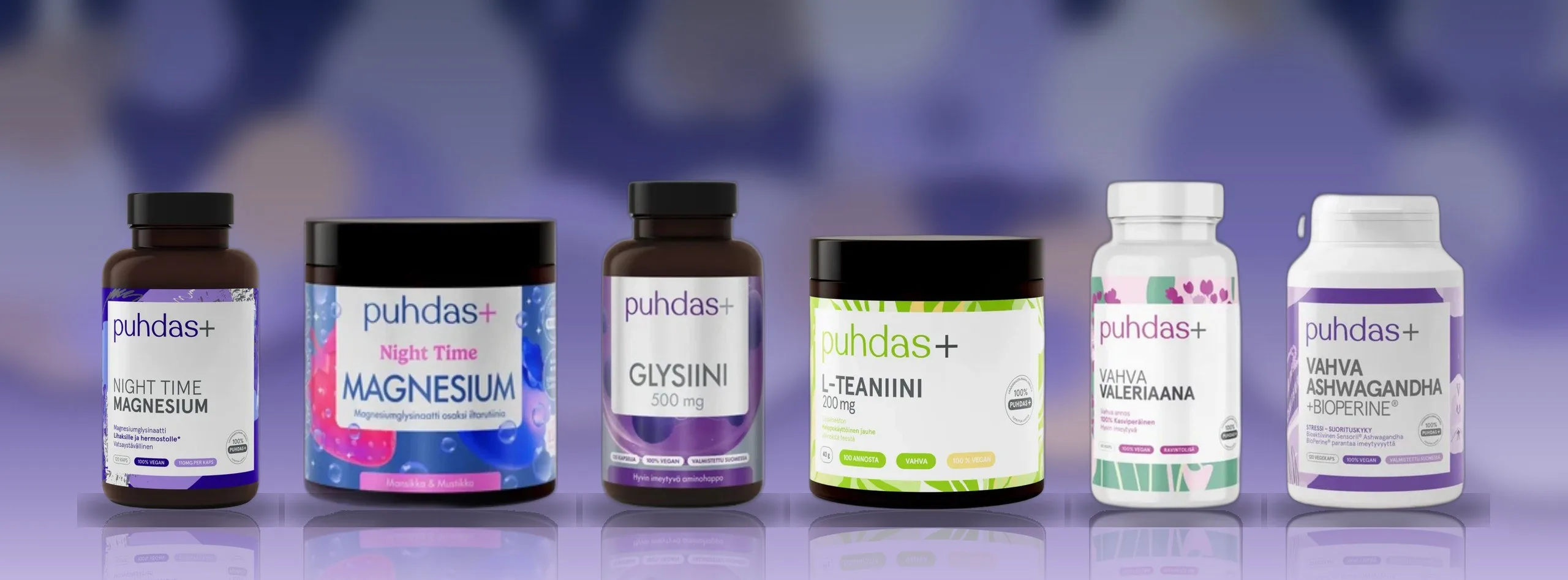
So why do so many take magnesium in the evening? Because it fits the routine: with food the stomach tolerates it better, and tea-book-magnesium is a ritual that calms in itself. Night magnesium is magnesium bisglycinate – a glycine-bound form that is gentle on the stomach and suits daily use. Night Time powder is the same magnesium as a strawberry-blueberry evening drink. More on the forms: Magnesium – which form suits you?.
Glycine, L-theanine, valerian – honestly

Glycine is an amino acid that is also part of Night magnesium. L-theanine is the amino acid known from green tea. Valerian and ashwagandha are plants used in the evening for centuries. None of them has an authorised EU health claim – so we describe them as ingredients, not promises, and let you try for yourself. Ashwagandha is usually taken in 6–8-week courses and is not recommended during pregnancy or with thyroid medication.
One important note: 5-HTP and L-tryptophan must not be taken with antidepressants without talking to a doctor.
Scents and dim light

Lavender essential oil in a diffuser is not a supplement and we make no promises about it either – but a familiar scent at the same time each day is one of the simplest ways to tell the body the day is over. Many of our customers use it together with dim light and a book.
Our suggested evening routine
9 pm: screens off, lights dimmer, diffuser on. 9.30 pm: a cup of tea or a Night Time drink, Night magnesium with a small snack. 10 pm: a book in bed, not the phone. 10.30 pm: lights out – and the same tomorrow.
If sleep has been broken for weeks, you keep waking up or snore loudly, do not experiment with supplements – talk to your family doctor. Sleep disorders are treatable, but not from a jar.
Frequently asked questions
When to take magnesium in the evening?
About an hour before bed with a light snack or an evening drink.
Can Night magnesium be taken every day?
Yes, bisglycinate suits daily long-term use. The adult reference intake is 375 mg.
Are magnesium and melatonin the same thing?
No. Melatonin is a hormone, magnesium a mineral. Puhdas+ does not sell melatonin.
You will find all evening-routine products in the sleep and stress category.
A food supplement is not a substitute for a varied and balanced diet or a healthy lifestyle. Do not exceed the recommended daily dose. Keep out of reach of children. If you are pregnant, breastfeeding, have a chronic illness or take medication, consult a doctor or pharmacist before taking a food supplement.