


The body can neither produce nor store vitamin C – you need it every day. Puhdas+ vitamin C products are pure ascorbic acid in capsules or as a powder, with no sugar, colourings or additives. Read more ↓
-
Immunity, Vitamin C, Vitamins
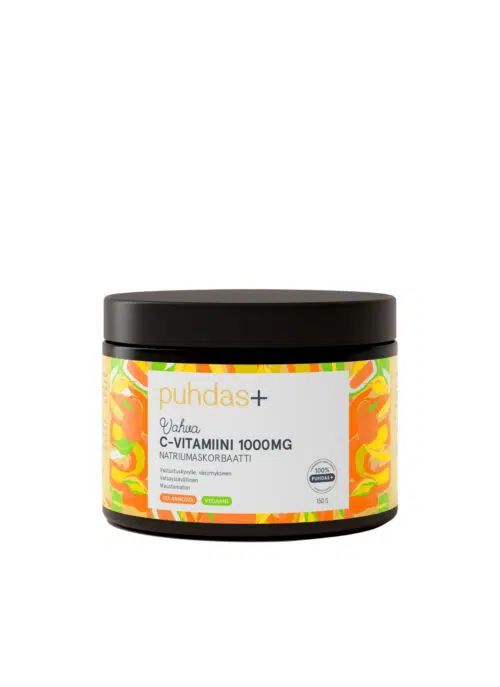
Vitamin C powder 1000 mg 200 g
21.50€Puhdas+ Vitamin C 1000 mg is a pure dietary supplement containing only sodium L-ascorbate. The powder form allows for easy mixing with water, juice or smoothies. Vitamin C contributes to…
-
 Bioactive compounds, Immunity, Vitamin C
Lactoferrin 200 mg + Vitamin C 40 capsules
31.50€Puhdas+ Lactoferrin + Vitamin C capsules combine lactoferrin and vitamin C in one convenient supplement. Lactoferrin is a natural protein derived from milk, often used in supplements with other nutrients….
-
 Immunity, Vitamin C, Vitamins
Strong Vitamin C 500 mg 60 capsules
16.50€A strong vitamin C supplement – vitamin C contributes to the normal function of the immune system, to the reduction of tiredness and fatigue and to normal collagen formation for…
What does vitamin C do in the body?
Vitamin C contributes to the normal function of the immune system, to the protection of cells from oxidative stress, to the reduction of tiredness and fatigue and to normal collagen formation for the normal function of skin, bones, cartilage and gums. Vitamin C also increases iron absorption – which is why it's included in our iron products too. An important claim for athletes: vitamin C contributes to maintain the normal function of the immune system during and after intense physical exercise (200 mg a day).
Capsule or powder?
Strong Vitamin C 500 mg is a simple everyday capsule. Vitamin C powder 1000 mg is pure ascorbic acid that you can dose flexibly into water or a smoothie, and it's the most economical option for the whole family. Lactoferrin + vitamin C is for those who want something more than just vitamin C.
How much and when?
The daily reference intake is 80 mg; doses of 500–1000 mg are common in food supplements. Excess vitamin C is excreted in the urine; very large doses can cause discomfort for a sensitive stomach, so take it with a meal. You'll find a plan put together for autumn in the article Immunity in autumn: vitamin D, vitamin C and zinc.
Frequently asked questions
Is it better to take vitamin C in the morning or in the evening?
The time of day doesn't matter – regularity does. As the body doesn't store vitamin C, a smaller dose twice a day works better than one large one.
Can I put vitamin C powder in hot tea?
Heat breaks down some of the vitamin C. It's better to mix the powder into cool or lukewarm water, juice or a smoothie.
Can vitamin C be taken with zinc and vitamin D?
Yes, these three don't interfere with each other's absorption and make a classic autumn combination.
Why is vitamin C paired with iron?
Vitamin C increases iron absorption. If you take iron, take it with vitamin C and separately from tea and dairy products.
Food supplements should not be used as a substitute for a varied and balanced diet and a healthy lifestyle. Do not exceed the recommended daily dose. Keep out of the reach of children.
Vitamin C — antioxidant for immune system and skin support
Vitamin C (ascorbic acid) is one of the most important and versatile vitamins. It helps protect cells from oxidative stress, contributes to the normal function of the immune system, contributes to normal collagen formation and helps reduce tiredness and fatigue.
Puhdas+ Vitamin C powder is a concentrated form that is easy to add to drinks and smoothies. Vitamin C also contributes to normal iron absorption, which makes it suitable for consumption alongside iron supplements.
Why is vitamin C important?
Vitamin C is a water-soluble vitamin that the body does not store, so the body needs it daily. It is found naturally in citrus fruits, berries and vegetables, but as a food supplement, vitamin C can be consumed in controlled doses. Also explore our immune system and skin, hair and nails selection. Food supplements do not replace a varied diet.